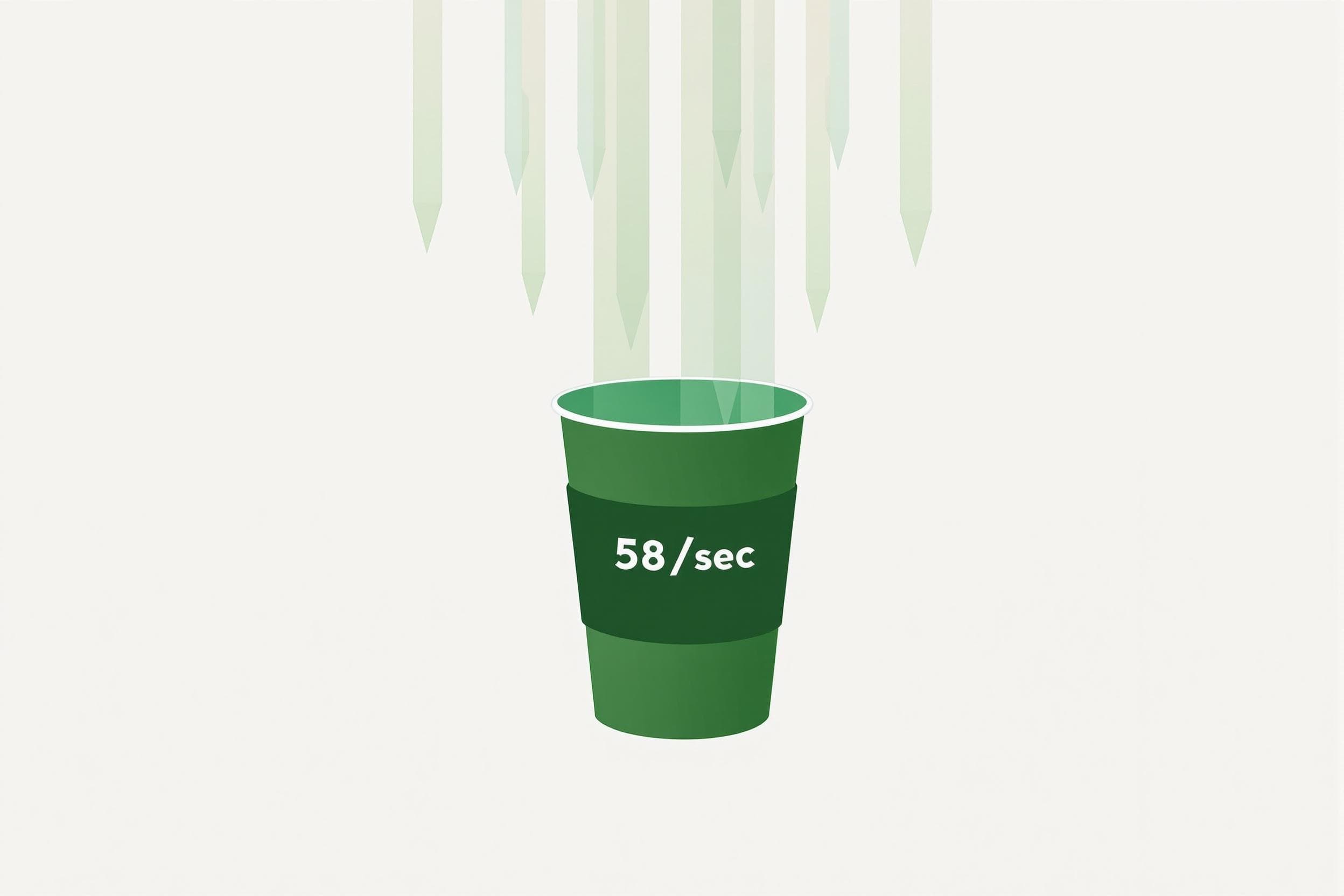
Every second, roughly 58 disposable cups from Starbucks enter our waste system. That's 5 million drinks daily in the US alone. But before we talk about where these cups end up, let's start where each day begins.
The daily ritual
It's 4:30 am, and like clockwork, lights flicker on in thousands of Starbucks stores across America. Each store is about to embark on a daily ritual that will consume enough water to fill an Olympic-sized swimming pool every three days.
Starbucks Sustainability Impact
Environmental footprint and initiatives
Daily Cups
Disposable cups daily in US
Water Usage
Gallons per cup of coffee
Global Reach
Countries with presence
Sustainability Investments (Millions USD)
Carbon Footprint
Metric tons of CO₂ emissions
Equivalent to 3.6M passenger vehicles annually
Sustainable Packaging
Of packaging is currently sustainable
Target: 100% by 2030
The empire of coffee
Picture this: if you lined up all Starbucks stores side by side, they would stretch from New York to Los Angeles. With a presence in 83 countries and annual revenue exceeding $23.5 billion, Starbucks isn't just serving coffee, they're running a small nation's economy.
To understand these numbers, imagine following a single coffee bean's journey. From the moment it's planted in Ethiopia to the second it's served in Seattle, that bean will:
- 01Travel an average of 8,000 miles
- 02Use enough water to fill a bathtub
- 03Generate the same carbon emissions as driving a car for 30 miles
The water crisis
Every single cup of coffee requires 37 gallons of water to produce. With 5 million drinks served daily in the US alone, that's enough water to fill Lake Tahoe every year. But in this crisis lies unprecedented opportunity.
The investment in change
The innovation opportunity
Packaging innovation
- California startup testing 100 % reusable cup model
- Potential to eliminate single-use waste entirely
Supply-chain technology
- Blockchain meeting coffee farming
- Real-time emissions tracking and optimization
Consumer engagement
- Gamifying sustainability for retail customers
- Turning daily coffee runs into environmental actions
Looking forward
The next chapter isn't just about survival, it's about the opportunities being created:
- Water recycling technology that could save millions of gallons per store
- AI-powered supply-chain solutions that could optimize farming by 10×
- Consumer apps that could make sustainability profitable and engaging
"The best time to plant a tree was 20 years ago. The second best time is today."